 Introduction to Animation
 TIMING
TIMING
is the essence of everything we do in animation. How slow or how fast
an object or character moves helps define that object or character.
In film animation there are 24 frames in each second (24x's or 24fps).
Full animation requires 12 to 24 drawings per second to achieve believable
action or movement.
If each drawing is photographed once (as in 24 drawings in a second) -
it is called one's. If each drawing is photographed twice (as in
12 drawings in a second) - it is called two's.
Dialog is a usually a mixture of one's and two's.
In the case of limited animation substantially less drawings are used
per second.
I have also seen where a squat character design is shot on three's
during walks movements.
| A hold is when the animation camera shoots one drawing for a number frames. Usually 6 frames is considered the shortest amount of screen time for a hold or a moving hold to register. Though some actions, such as eye blinks have different timings. | 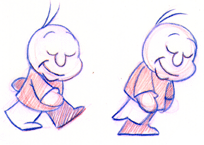 |
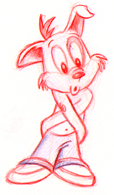 |
Bill Littlejohn, a master animator, one day over breakfast passed on a jewel of animation wisdom, "If you ever get in trouble( with a scene)...make the character blink." Sounds simple enough and yet think of the possibilities - especially as related to TIMING. |
Here
is the TIMING for a normal eye blink:
Note: The last drawing was held 6 x's.

Even
an eye blink can take on new meaning by playing with the TIMING!
A Snap Blink!

A snap
blink is meant to be very quick with no inbetweens - just open and
closed and open again!
Note:
the closed position of the eyes is shown at an angle because of the muscle
tension of a quick close movement.
A Double blink includes two closed positions.
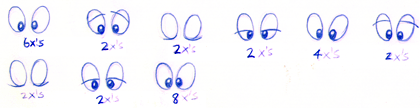
Next, a single blink with the emphasis on the closed position.

Remember,
holds and moving holds always come at the end of an action or movement.
(such as, the open and closed positions of the blink).
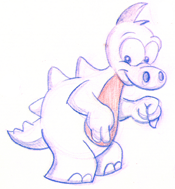
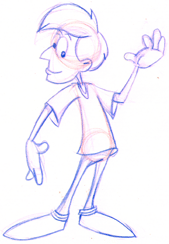
WEIGHT can affect the TIMING of a character or object. A
heavy character moves slower (uses more drawing to move) than a lighter
character.
 |
 |
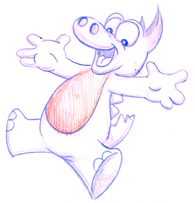
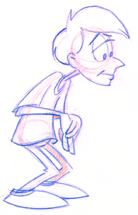
EMOTIONS also affect the
TIMING. A depressed or sad character who has the "weight of the
world" on their shoulders will move slower than a happy, upbeat, or victorious
character.
 |
 |
ENERGY
is another ingredient to consider. A run-down, tired character is slower
and takes longer to perform a task than when the same character is awake
and vibrant and ready to go!
SPECIAL EFFECTS
- Most spfx are shot on one's.
Effects such as spins, explosions, etc. cover a large area on the scene
in a short amount of time. To maintain the persistence of vision and insure
smooth movement he effects are shot on one's.
We will cover moving holds and cushions in another lesson.
Review
TO RECAP
|
HINTS
|
| To Next Page |