 Introduction to Animation
 POSING
POSING is another
of the important principles of animation. It is through POSING
that our charcters express their emotions to the audience. As with many
of the principles of animation, POSING is derived from the theater.
In the theater, actors learn to express themselves through body language.
Walt Disney often talked about how he studied the movements and body language
of the great Charlie Chaplan and others then and utilized this as reference
for his early animated stars.
POSING usually pertains to the KEY drawings in a animated
scene. The KEY drawings are drawn first and then tested before
the INBETWEENS are drawn.
Let's "POSE-OUT" a character called...Henri
Having a plan helps so our first step is to THINK of the character.
His attitiudes, emotions, his purpose in the scene and how he will express
them. Once we have given the character and scene some thought...
...then it is time to think with our pencils... and draw a few THUMBNAILS
Step 1
| Draw
several drawings to EXPLORE different poses. Depend on
the BODY ATTITUDES to sell the pose... not the facial expressions. |
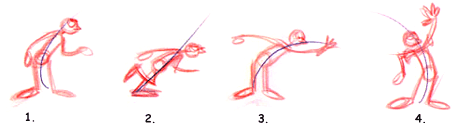
Step 2
Now take
your THUMBNAILS and blow them up to the normal size.
Remember to start with your LINE OF ACTION and really try to exaggerate
it. Always keep in mind the emotion you want to express. Make a series
of drawings which tell the story of the scene.
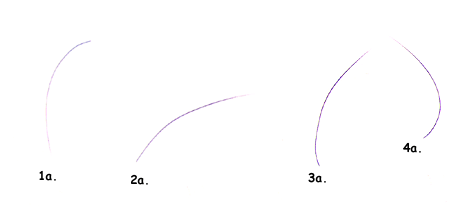
You can have "meek" LINES OF ACTION (#1);
"aggressive" LINES OF ACTION (#2), and so on.
Step 3
Build
your character pose around the LINE OF ACTIONS.
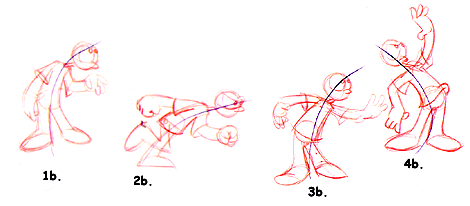
Keep your drawings loose and spontaneous and keeping trying to exaggerate
or PUSH the drawings
Step 4
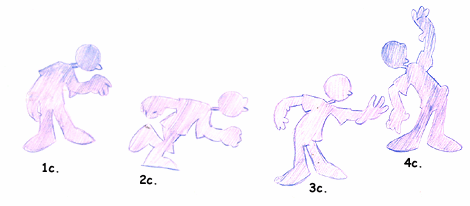
One of the most important elements to
good POSING is a readable SILHOUETTE. The emotion must read
as a graphic - easily discernable from the back of the room or in our
case, the screen.
Step 5
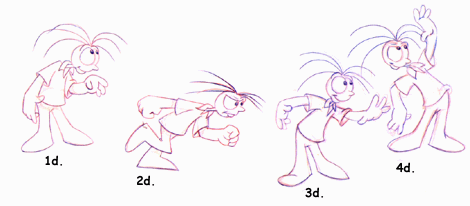
Once you have the LINE OF ACTIONS, and SILHOUETTES
pushed, look for other elements in the drawing to assist in the emotion.
Elements such as the hair, hands feet (the weight), and clothing can enhance
your POSES.
Note:
the agressive HAIR, HANDS and CLOTHING
in pose # 2
Note: the
flow of the ARMS AND FEET in drawings # 3 and #4
Use everything available to create clear POSES and emotions.
REMEMBER: Keep it loose and flowing
Review
KEY POINTS
|
TIPS
|
| To Next Page |