The Music Room The Music Room |
To Brebru.com |
To Band Pages |
1958 to 1965Late January- Early March, 1958
Elvis films and records for his fourth motion picture, King Creole.
March 15, 1958
Elvis performs two shows in Memphis. These are to be his last stage performances until after his army release in 1960.March 24, 1958
Elvis Presley is inducted into the U.S. Army at the Memphis Draft Board and is assigned serial number 53310761.
March 25, 1958
Elvis gets his famous G.I. haircut at Fort Chaffee, Arkansas.
March 29, 1958
Private Presley arrives at Fort Hood, Texas for basic training and is stationed there for six months. His parents soon move to a temporary home near the base.June 10, 1958
After basic training, while on his first leave, Elvis has a recording session, his last until 1960.July, 1958
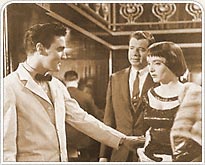
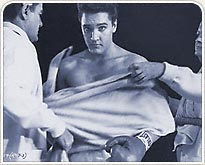
King Creole, Elvis’ fourth motion picture opens nationally and the reviews are the best he will ever have for his acting. Its impressive list of co-stars and supporting cast includes Carolyn Jones, Walter Matthau, Dean Jagger and Vic Morrow. It becomes a top five film at the box office. This Michael (Casablanca) Curtiz-directed movie, set in New Orleans and based upon the Harold Robbins novel, "A Stone for Danny Fisher," will come to be regarded as Elvis’ finest film, his greatest acting performance, and proof positive of his potential to have become a respected serious actor, though the realization of this desire will remain forever out of his grasp.August, 1958
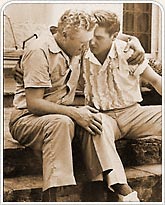
Gladys Presley becomes ill and returns to Memphis to be hospitalized with acute hepatitis. Elvis is granted emergency leave and arrives in Memphis on the afternoon of August 12th. He visits her that night, and the next day and night. A few hours after Elvis goes home to Graceland to rest, she dies in the early hours of August 14 at age 46. Her body lies in state at Graceland that afternoon. Services are at the Memphis Funeral Home on the 15th, with the Blackwood Brothers singing "Precious Memories" and "Rock of Ages," two of Gladys Presley’s favorite hymns. She is laid to rest at Forest Hill Cemetery, a few miles down the road from Graceland. Elvis is devastated.August 25, 1958
Elvis reports back to Fort Hood.September/October 1958
September 19, Elvis boards a troop train to New York, later boards the USS. Randall and sails to Germany, arriving on October 1. He will be stationed in Friedberg for 18 months, maintaining an off-base residence in Bad Nauheim, shared with his father and grandmother, and some friends from Memphis. He finds the fans in Europe to be as enthusiastic as those in America.
January 8, 1959
Elvis is interviewed off-camera via trans-Atlantic telephone by Dick Clark on his American Bandstand show on ABC-TV. The show commemorates the star’s twenty-fourth birthday. (Elvis never performed on American Bandstand.)On a two-week leave, Elvis visits Munich, then goes clubbing in Paris, which includes a visit to the Lido.
Colonel Parker continues to keep Elvis’ career alive with promotions and hit record releases.
November 1959
Captain Joseph Beaulieu is transferred from Texas to Weisbaden Air Force Base near Friedberg, accompanied by his wife and children, including his fourteen-and-a-half- year-old stepdaughter, Priscilla Ann. (Priscilla is the only child from Ann Beaulieu’s marriage to her first husband, James Wagner, a Navy pilot who was killed in a plane crash when Priscilla was an infant.) Through a mutual friend, Priscilla is invited to a party at Elvis’ home soon after her arrival in Germany. They meet, and the rest is history.January 20, 1960
Elvis is promoted to Sergeant.March 1960
Elvis leaves Germany on March 1, arriving in New Jersey the next day for a press conference, and is officially discharged from active duty on March 5, 1960. He boards a train for Memphis, arriving on March 7. Press and crowds of fans are everywhere for this historic series of events. He holds a press conference at Graceland in his father’s office behind the mansion on March 8.
He has served his country just like any other GI, with no special privileges his celebrity status might have afforded him. These two years away from his career have been a time to mature. He has also worried constantly that his lengthy absence might have damaged his career progress. But, he has yet to see his greatest stardom.Late March, 1960
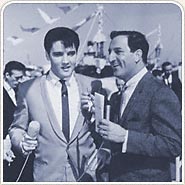
Elvis has his first post-army recording session. Some of the recording work is for the album Elvis is Back!, which will hit number two on the Billboard pop chart. (Sessions will continue in early April.) On March 21 he receives his first degree black belt in karate, an interest he developed while in the army. On March 26 he tapes a special "Welcome Home, Elvis" edition of Frank Sinatra’s ABC-TV variety show, for which he is paid $125,000, a record sum for a variety show appearance at the time.Late April, 1960
Elvis begins filming and recording for his first post-army movie, his fifth film, "GI Blues" for Paramount, the first of nine to be produced (not consecutively) by Hal Wallis. "GI Blues" co-stars dancer/actress Juliet Prowse.May 8, 1960
ABC airs Frank Sinatra’s Welcome Home, Elvis edition of his variety show, which attracts a 41.5% share of the national television audience.July 3, 1960
Vernon Presley marries divorcee and mother of three sons, Davada (Dee) Stanley, an American whom he met Germany, where she had been stationed with her military husband. They live at Graceland briefly, then move to a home nearby.August/September 1960
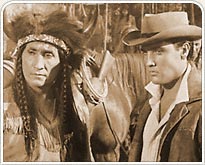
Elvis records and films for his sixth movie, Flaming Star, a drama with limited music. Elvis plays the son of a white father and a Native American mother, torn between the two cultures in the 1800's. The film co-stars Barbara Eden.
October, 1960
The soundtrack album for GI Blues enters the Billboard album chart and soon goes to number one. It remains number one for ten weeks and stays on the chart for 111 weeks. It is to be the most successful album of Elvis’ entire career on the Billboard charts. (In terms of total record sales over time, it is uncertain which album stands as the most successful.)November 1960
Elvis begins recording and filming for his seventh film, Wild in the Country, which will be completed in January. GI Blues opens nationally to warm reviews and big box office sales and is among the fifteen top-grossing films of the year. It is a light comedy melodrama with lots of singing by Elvis, who is seen in uniform for most of the movie.Late December, 1960
Flaming Star opens nationally to warm reviews, but unlike GI Blues, this dramatic film with little singing does not set the box office on fire. However, Elvis earns recognition from a tribal council for his positive portrayal of a Native American in this racially charged drama. The film is banned in South Africa due to its interracial theme.February 25, 1961
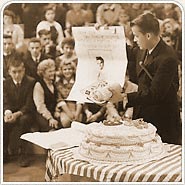
Elvis appears in Memphis at a luncheon in his honor, and numerous recent awards Elvis has received are shown to the press and others attending. A press conference follows. Then, Elvis performs one afternoon show and one evening show at Ellis Auditorium to benefit around thirty-eight Memphis-area charities. Other than the Sinatra television show, these shows are, so far, Elvis’ only live performances since his army discharge. “Elvis Presley Day” is proclaimed by Tennessee Governor Buford Ellington. Every year after this, Elvis donates money to a list of Memphis-area charities, eventually reaching fifty or more, usually around Christmas time. Within a few years, to show their appreciation the city gives him a massive plaque listing fifty charities.March 25, 1961
Elvis arrives in Hawaii for a press conference, then an evening concert at Bloch Arena at Pearl Harbor. He is there to perform a benefit to help fund the building of the USS Arizona Memorial. Hundreds of fans mob the airport as he arrives. His show raises around $65,000 for the memorial, with related promotions bringing the total to about $100,000. The event also helps bring publicity and public awareness and support to the project. The fund-raising efforts, for the most part, had been difficult up to this point. The rest of the needed funds are soon raised, and the memorial is completed a year later. Elvis receives numerous official honors in appreciation for this benefit. This turns out to be Elvis’ last live, non-movie performance until his 1968 television special.Late March/Mid- April, 1961
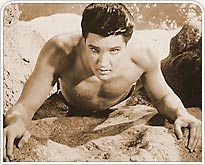
Elvis remains in Hawaii to do location filming for his eighth motion picture, Blue Hawaii, having already done soundtrack recording. Later, there is additional filming to be done back in Hollywood for this film. From this time on, Elvis will have a fondness for Hawaii.June, 1961
Wild in the Country, co-starring Hope Lange, Millie Perkins and Tuesday Weld, opens nationally to mixed reviews. Like Flaming Star it is a melodrama with limited singing by Elvis. It, too, does not set the box office on fire.July, 1961
Elvis records and films for his ninth motion picture, Follow That Dream. Filming includes some location shooting in Florida.Non-movie-related hit records and recording sessions have also continued through this period.
October, 1961
The soundtrack album for Blue Hawaii enters the Billboard chart for a year-and-a-half run, staying at number one for twenty weeks, second only to GI Blues as the biggest album of Elvis’ career on the Billboard charts. It also yields a number two single destined to become an Elvis classic, Can’t Help Falling in Love.Non-movie-related recordings and hit records have continued through this period, with Good Luck Charm hitting number one in 1962, his last number one pop hit until Suspicious Minds in 1969.
October/November, 1961
Elvis records and films for his tenth motion picture, Kid Galahad, completing it in January.Late November 1961
Blue Hawaii opens nationally to warm reviews and gets to number two on the box office charts. It becomes the top-grossing film of Elvis’ career thus far. Its characteristics of a non-cerebral plot, lavish scenery, lots of songs by Elvis, and lots of pretty girls become the basis for the “Presley formula” movies of the sixties, though most of them will not be nearly so well done.Late March/Late April, 1962
Elvis records and films in Hollywood, and does location filming in Hawaii for his eleventh motion picture, Girls! Girls! Girls!.May/June 1962
Follow That Dream opens nationally and gets to number five on the box office charts. It is warmly reviewed and does fairly well in sales.Late August/September 1962
Elvis records and films for his twelfth motion picture, It Happened at the World’s Fair. Shooting is both in Hollywood and on location at the World’s Fair in Seattle.Kid Galahad opens nationally and does relatively well with a brief stay in the top ten on the box office chart.
October 1962
In Mexico, riot behavior in a theater showing GI Blues prompts the Mexican government to ban Elvis movies. Torn seats, broken windows, and other damage is reported.November 1962
Girls! Girls! Girls! opens nationally and rivals Blue Hawaii in box office success. This is the second film to use the so-called “Presley formula”, and it works. The soundtrack album goes top five and yields the hit single Return to Sender.December 1962
Priscilla Beaulieu had flown from West Germany to visit Elvis in Los Angeles in the summer of this year for their first time to see each other after his army discharge. In December her parents allow her to spend the Christmas holidays with him at Graceland in Memphis. She returns to her family briefly, then moves to Graceland in early 1963, finishing her senior year of high school in Memphis and turning eighteen years old on May 24, 1963.Late January/February 1963
Elvis records and films for his thirteenth film, another “formula” movie, Fun in Acapulco.
April 1963
It Happened at the World's Fair opens nationally and does relatively well at the box office, though its plot is the most frivolous of any Elvis film so far. The soundtrack album goes top five.Non-movie recordings and hits continue through this period.
July 1963
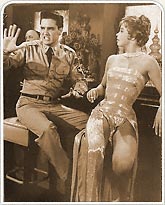
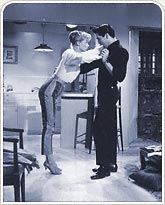
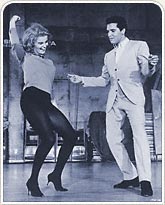
Elvis records the music, then, on location in Las Vegas and in a Hollywood studio, he films for his fourteenth motion picture, Viva Las Vegas, co-starring Ann-Margret. (It will be his fifteenth movie to be released as Kissin’ Cousins, which he is to shoot next, will actually be released before Viva Las Vegas.)October 1963
Elvis records and shoots for his fifteenth motion picture, Kissin’ Cousins.Late November 1963
Fun in Acapulco opens nationally and quickly goes to number five at the box office. The soundtrack goes to the top five on the pop chart.January/February 1964
Elvis purchases the Potomac, former presidential yacht of Franklin Roosevelt, for $55,000. He intends to donate it to the March of Dimes for use as a national shrine (FDR suffered from polio, the main disease fought by the March of Dimes). Costs of maintaining the yacht would be prohibitive, so the March of Dimes declines to accept the gift. Elvis attempts to give it to the 7th Coast Guard District Auxiliary in Miami, which also doesn’t work out. Finally, on February 13 he presents the yacht as a gift to a gift to St. Jude Children’s Research Hospital in Memphis for them to use to raise funds as they see fit. The ceremony takes place in Long Beach, California with actor and hospital founder, Danny Thomas, accepting.During this saga of trying to donate the yacht, the Beatles make their first appearance on The Ed Sullivan Show and Sullivan reads on the air a congratulatory telegram from Elvis and the Colonel. American music and pop culture will soon change dramatically with the "British invasion", much as it had after Elvis hit it big in the fifties.
Elvis has become bored and frustrated with his film and recording career. It will only get worse.
March 1964
Kissin’ Cousins opens nationally. One of the poorest quality films of his career, it still quickly hits number eleven at the box office, then quickly falls, and the album goes top ten.Elvis begins filming for his sixteenth motion picture, Roustabout, co-starring Hollywood legend Barbara Stanwyck. He had recorded the music during the previous month.
June 1964
Elvis records music for his next film, Girl Happy.Viva Las Vegas opens nationally and goes to number eight at the box office. It’s one of the better Elvis movies of this period, and the songs are better as well.
July/August 1964
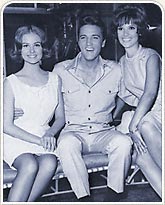
Elvis shoots his seventeenth motion picture, Girl Happy, which co-stars Shelley Fabares and former Miss America, Mary Ann Mobley.October 1964
Elvis begins shooting eighteenth motion picture, Tickle Me. The soundtrack has no new recordings. Instead, previously released non-movie recordings are used, apparently to keep production costs to a minimum.November 1964
Roustabout opens nationally and hits number eight at the box office. The soundtrack, which represents some of the best Elvis movie music in a while, goes to number one on the Billboard pop album chart.March/April 1965
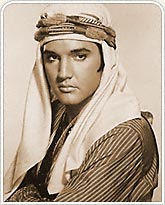
Elvis records the soundtrack and does the filming for his nineteenth motion picture, Harum Scarum, which co-stars Mary Ann Mobley.April 1965
Girl Happy opens nationally and does relatively good business. The soundtrack album goes top ten.Non-movie record releases have continued during this period.
May 1965
Elvis records music and does filming for his twentieth motion picture, to be released out of chronology as his twenty-first, Frankie and Johnny, co-starring Donna Douglas.July 1965
Tickle Me opens nationally.Elvis donates $50,000 to the Motion Picture Relief Fund, reportedly the largest single donation the organization has ever received up to this date. Accepting for the organization are Barbara Stanwyck and Frank Sinatra.
August 1965
Elvis records soundtrack music for his twenty-first motion picture, Paradise, Hawaiian Style, which will be released out of chronology as his twentieth, then goes to Hawaii for location shooting. During a break in filming, he visits the USS Arizona Memorial. The visit is covered by the press and prompts Hawaiian Senator Daniel Inouye to have the visit recognized in the Congressional Record. Elvis returns to Hollywood for more shooting for the film.August 27, 1965
The Beatles visit with Elvis for several hours at his home in California and have an informal jam session.November 24, 1965
Harum Scarum opens nationally and hits number eleven at the box office, then falls, as has been the pattern for most of Elvis’ movies during the past few years. (Hit fast, burn out quickly, but make a sizable profit and sell some records.) The soundtrack album goes to number eight.