More Creative Differences
The legends and cultural history of people around the world include
the horse - in fact, the image of this strong beast has captured
the imagination of artists for centuries.
Although the subject is the same, the feelings surrounding the following
works of art (created over a period of 15,000 years) are all very
different.
(You may click on the following examples to see larger versions.)
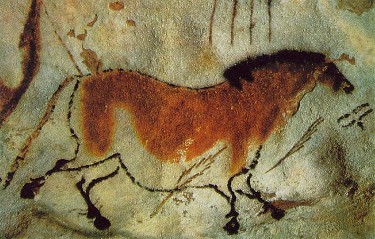
Cave Painting
Horse
c. 15,000-10,000 BC
Lascaux, France
This horse was painted 17,000 years ago, using animal fat and
earth. The importance of the horse to hunters in prehistoric
times, is evidenced by drawings such as this one. |
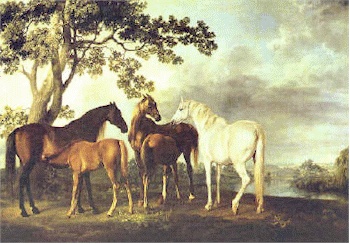
George Stubbs
(1724-1806)
Mares And Foals In A Wooden Landscape
George Stubbs was a British artist who loved animals… particularly
horses. His image of "Mares and Foals in a wooden landscape"
has a quiet beauty. |
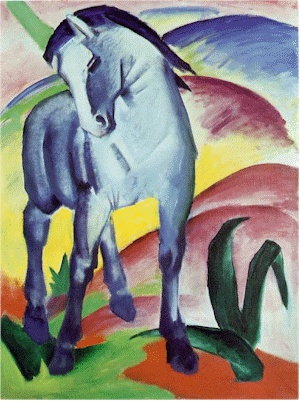
Franz Marc
Blue Horse I (Blaues Pferd I)
1911
Oil on canvas
Stadtische Galerie im Lenbachhaus, Munich
German expressionist Franz Marc (1880-1916) often used horses
in his art. This work, painted in 1911, has an almost magical
or ethereal feeling surrounding it. |
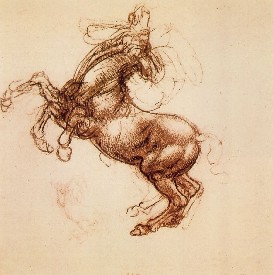
Leonardo Da Vinci
Rearing Horse
c. 1483-1498
Red chalk
7 1/8" x 5 5/8"
Windsor Castle, the Royal Library
Renaissance man Da Vinci created this red chalk drawing in the
late 1400s. It is clearly an anatomically correct rendering
of a large and strong animal. |
What the viewer ultimately takes from a work of art is highly
personal. When I look at any of the horse images above, something
will jump out at me and it probably isn't the same thing that jumps
out at you. It is for this reason that whether or not a work of
art is of value to society - whether or not a work of art tells
a relevant story - depends a great deal upon your personal point
of view. This is especially true in contemporary art where subject
and story are sometimes rather difficult to decipher.
Which brings us to the assignment for this lesson …
Go On to the Assignment